New Program Combines Ecology with Engineering.
Mateusz Perkowski
Capital Press
Due to their ability to control soil erosion and soak up chemicals, plant roots are becoming viable tools for managing irrigation systems, treating wastewater and cleaning up environmental toxins.
Such tools are less ecologically intrusive and they're often cheaper than traditional engineering methods, said Jason Smesrud, global tech leader for agricultural services at the CH2M Hill engineering company.
Filtering municipal wastewater through a specially constructed wetland for effluent cooling, for example, uses a lot less energy than a mechanical chilling system, he said. "That would be much more resource consumptive, with higher operations and maintenance cost."
However, most people with engineering backgrounds aren't well versed in the dynamics of plant growth and soil structure, said John Bolte, interim department head of Oregon State University's department of biological and ecological engineering.
"If you can't understand the interconnectedness, you can't manage the system," he said.
This lack of experience puts a burden on employers, including farmers, engineering consultants and government agencies, who must then teach engineers how to bridge the gap between environmental and engineered solutions themselves.
"They need students who understand traditional engineering and how it intersects with biological and ecological systems," said Bolte.
For this reason, OSU has launched a new undergraduate program that combines ecology with engineering.
"By the time they leave, we expect them to be fluent in both," he said.
About 10 students will complete their first semester of the ecological engineering curriculum this spring, and the program is expected to grow to about 120 students within five years, said Bolte.
For several years, the university has offered a graduate program in biological and ecological engineering - evolved from its agricultural engineering program - but the students who enroll are generally interested in pursuing careers in research, he said.
The undergraduate program, on the other hand, will produce engineers ready for work out in the field, Bolte said.
Applications for ecological engineering are numerous: In agriculture, an understanding of how plants uptake nutrients and stabilize soil structure can help make irrigation more efficient while reducing chemical runoff and bank erosion, he explained.
These principles can also be used in remediating environmental hazards, like munitions sites, since plants can absorb and immobilize dangerous substances.
Vegetation can also form a landfill cap, decreasing surface erosion and water infiltration into the underlying waste, thus preventing chemicals from leaching.
"There's a lot of opportunity," said Lou Licht, founder of the Ecolotree company, which uses hybrid poplar trees for these and other purposes.
In the case of Ecolotree, the system has the dual benefit of generating a salable wood product.
Despite the obvious benefits, the ecological engineering approach has taken a while to catch on. Many of the techniques have already been pioneered in research, so it's now a matter of implementing them, said Licht.
"It's an underutilized technology," he said.
The current buzz about renewable energy may give the field an added boost.
Using simple life forms for more efficient energy production is an appealing possibility being studied by ecological engineers, said Bolte. For example, algae contains a higher oil content than traditional oilseed crops, so it could be a biodiesel feedstock, he said.
Cyanobacteria, often called blue-green algae, has the potential to produce hydrogen for electricity generation, said Jed Eberly, a graduate ecological and biological engineering student at OSU.
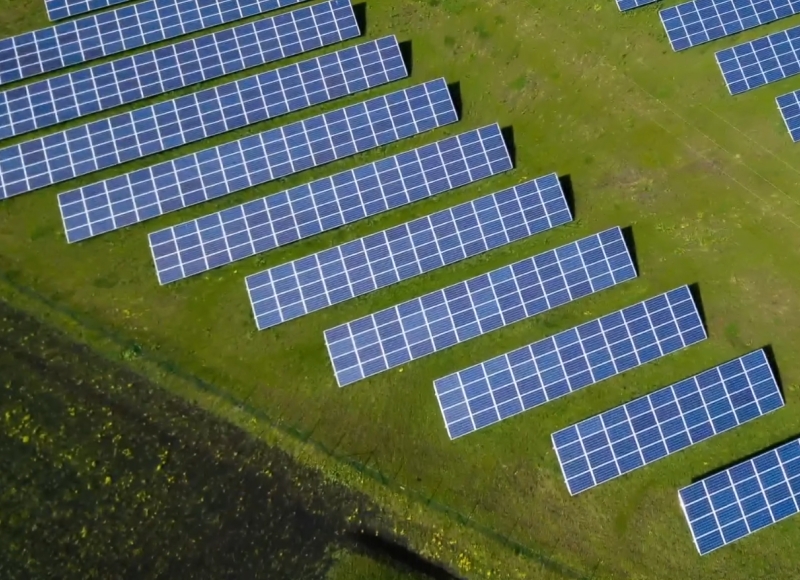
Unlike the photovoltaic cells in solar panels, which need direct exposure to light in order to generate electricity, cyanobacteria can photosynthesize energy even under overcast skies, he said.
So, a system that relies on cyanobacteria would be more efficient than current solar technology, Eberly said.
Of course, using life forms for engineering purposes is inherently more complicated than using traditional engineering tools, said Bolte. Plants and microorganisms are more variable than tightly controlled systems and are prone to pathogens - challenges that are familiar to farmers, he said.
"All the things agricultural producers deal with occur in these systems," said Bolte.
Devising new ways that plants and microorganisms can solve engineering problems - and how to better manage those systems - will provide ecological engineers with plenty of work in the years to come, he said.
"We're not sure what the applications are going to be in the future," Bolte said. "This is a very rapidly expanding area."
Staff writer Mateusz Perkowski is based in Salem, Ore. E-mail: mperkowski@capitalpress.com
[more research stories]
2007 Spring Social/Scholarship Award Ceremony
BEE Solar Racer Booth at daVinci Days
About Corvallis, Oregon, with slide show |
Fiber Optics for Environmental Sensing

Oregon Scientist Creates Waves in Water Research

Bio-fuels Processed From Algae
Power from H20
Using Wastwater Bacteria to Power Fuel Cells
Restoring Rivers
Hong Liu
OSU Designs New Biological Fuel Cell
BEE faculty member Hong Liu receives a 2005 Popular Mechanics Breakthrough Award for her work on "Hydrogen Production using BioElectrochemically Assisted Microbial Reactor" [full story]
Faculty Member Appointed to Chair Large-Scale Field Experimentation Technical Committee of the American Geophysical Union
Richard Cuenca, Professor in the Dept. of Biological & Ecological Engineering, was recently appointed to chair the Large-Scale Field Experimentation Technical Committee of the American Geophysical Union (AGU). Prof. Cuenca has been examing land-vegetation-atmosphere interactions and developing simulation models for understanding global climate change
OSU Biological Engineers receive NSF grant to develop Biologically-based Hydrogen Production Systems [full story] Biohydrogen faculty in Portland News[full story]
|